
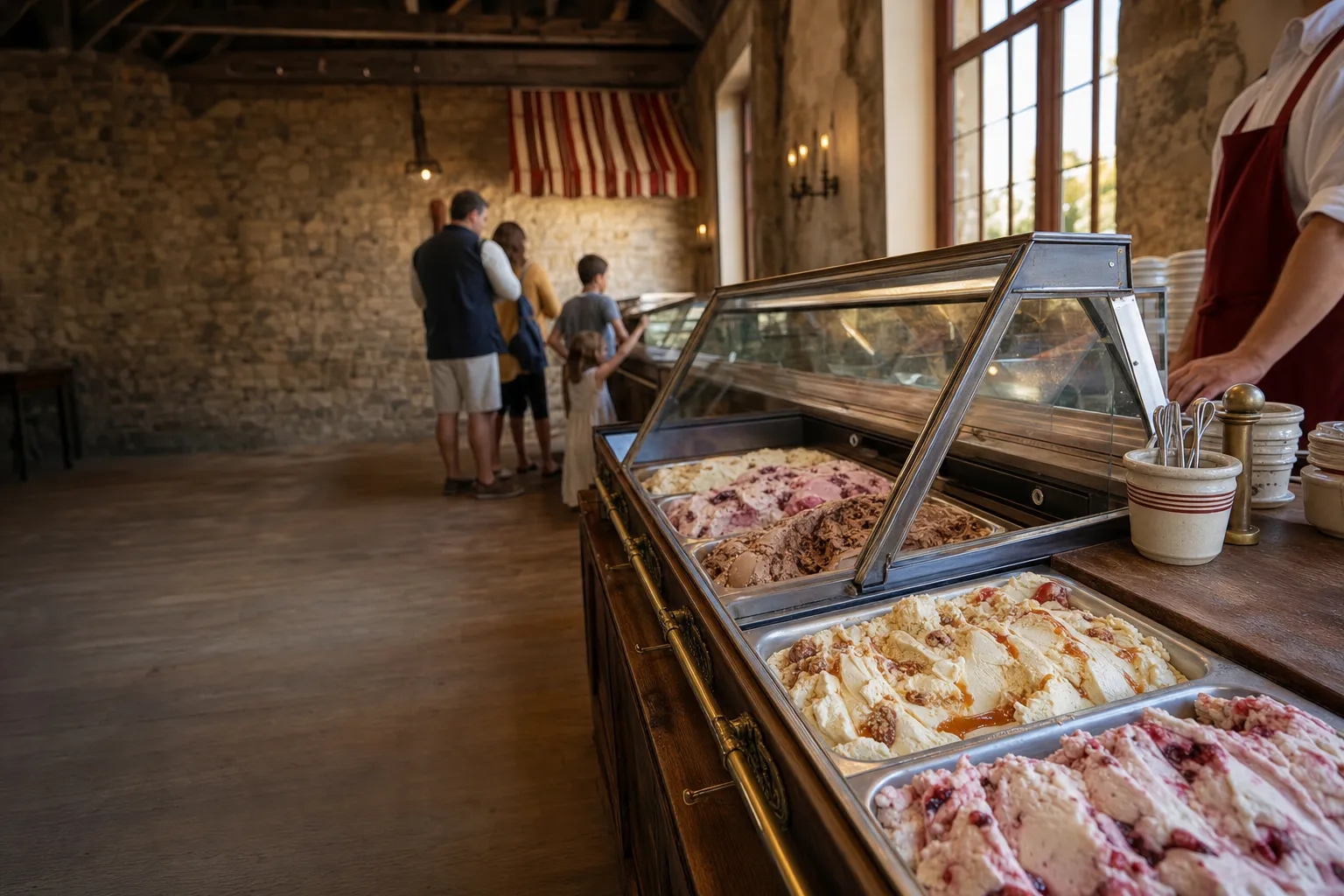
Great ice cream flavor pairings combine contrast and harmony so each spoonful feels complete, not crowded. At Brooker's Founding Flavors Ice Cream we design pairings so a base flavor, a secondary note, and a texture element work together from the first lick to the finish.
How we think about flavor pairings
We start with the ice cream base and build outward. That base includes the dairy profile, the fat level, and the texture from our small batch churn. From there we add a primary flavor ingredient, a supporting note, and a textural element or topping. Each piece has a role: flavor, counterpoint, or mouthfeel.
When we create new pairings we focus on three simple goals:
- Clarity. Every dominant flavor should be recognizable on its own.
- Balance. Sweetness, acidity, salt, and bitterness should sit in a pleasing ratio.
- Texture contrast. A creamy scoop with a crunchy topping, a swirled ribbon, or a soft cake element keeps the spoon interesting.
Key elements of successful pairings
Base profile and texture
The base determines the canvas. Our super premium small batch base brings a dense, creamy mouthfeel that stands up to chunky mix ins and swirls. A lighter custard base reads differently than a high butterfat cream base, and that changes which mix ins pair best.
Aromatics and flavor intensity
Some ingredients are volatile aroma carriers, like coffee or citrus zest. Others are textural flavors, like toasted nuts or cookie pieces. We match intensity so a delicate honey or vanilla note is not overwhelmed by a bold espresso or dark chocolate.
Sweetness, acid and salt
Sugar level matters, but so does acidity and salt. A splash of acid from lemon curd or tart berry brightens a rich caramel. A touch of salt on a chocolate base makes dark notes pop. We tune sweetness and salt to keep the pairing lively rather than cloying.
Temperature and melting behavior
How an ice cream melts changes the experience. Faster melting sherbets are best matched with crisp toppings. Slow melting, high fat bases carry swirls and ribbons evenly through the bowl.
Classic pairing principles with examples
Below are practical pairing ideas we use in our shop and recommend for families and visitors looking for something reliably delicious.
- Complementary pairing. Two flavors from the same family, like brown butter and toasted pecan, deepen a theme without jarring the palate.
- Contrasting pairing. A bright, acidic fruit against a rich, creamy base, for example raspberry ripple with vanilla bean, gives each spoonful a lift.
- Texture pairing. Combine a velvety base with a crunchy element, such as chocolate shard or candied nuts, to add interest with every bite.
- Temperature contrast. Serve warm cake or a warm sauce with a cold scoop to emphasize both sensations, a technique we use for sundae specials.
Here are real combinations we rely on when composing the menu or suggesting scoops:
- Vanilla bean with salted caramel swirl and toasted nuts.
- Coffee ice cream with dark chocolate chips and a little orange zest.
- Buttermilk or tart cream base with lemon curd and shortbread crumbs.
- Salted butter caramel with apple compote for a seasonal fall pairing.
How we test and refine pairings at Brooker's
We follow a repeatable process for creating and approving new pairings so the menu stays imaginative and consistent.
- Concept and sourcing. We begin with an ingredient idea and confirm that we can source it at the quality our recipes require, often from local family dairies or seasonal produce vendors.
- Small batch trials. We make small test batches to evaluate how the flavor behaves in our base and how it stands up to mix ins or swirls.
- Texture and temperature checks. We watch how the test batch melts and how added components perform over a ten minute tasting window.
- Staff tastings and feedback. Our team samples the trial, suggests tweaks, and checks naming and presentation to fit the shop s tavern style theme.
- Limited release and customer response. We bring a pairing to the counter as a limited run, observe customer reactions, and collect informal feedback before deciding whether it becomes a regular or seasonal feature.
Because we craft small batch, super premium ice cream, each change in ingredient or technique can shift the final result. That is why testing on our equipment is a necessary step before we serve a new pairing to families and guests.
Designing pairings for family visits and parties
When you are ordering for a birthday party, school group, or family outing we think about variety and approachability. Kids often prefer clear, simple flavors, while adults may enjoy a contrasting note. Here is how we plan pairings for groups.
- Cover the basics. Include a crowd pleasing base like vanilla bean or chocolate so everyone has a familiar option.
- Add two interest flavors. One flavorful but family friendly option, such as cookie dough or salted caramel, and one seasonal or adventurous option, like a berry swirl or spice blend.
- Include at least one texture element. Offer a crunchy topping or cookie to give diners something to mix in that changes the bite.
- Provide a palate reset. Water or plain sorbet works well between rich flavors so younger tasters can try more options.
Pro tip: When sharing scoops, start with lighter flavors then move to richer ones. That order helps tasters notice subtle notes before stronger flavors dominate.
Seasonal thinking and local ingredients
We deliberately use seasonal ingredients and highlight local dairy because seasonal produce and fresh cream influence pairing success. In summer, bright berries and citrus pair well with lighter bases. In colder months, baked apple, spicy vanilla, and hot drinking chocolate notes pair with denser custard bases and sundae warmers.
Working with local family dairies gives us a clean, natural dairy profile that supports delicate flavors. When a supplier changes milkfat or solids from season to season we adapt recipes to preserve balance and mouthfeel.
What to look for when choosing pairings at the counter
If you are visiting Brooker s Founding Flavors Ice Cream in Saratoga Springs and want to choose pairings that please the whole group, keep these criteria in mind.
Ordering checklist
- Is the dominant flavor clear and named descriptively on the menu?
- Is there a contrasting option available to balance the rich choices?
- Does a texture element, like nuts, shortbread, or a ribbon, pair well with the base?
- Do any allergens need to be avoided or separated for your group?
We display ingredients and common allergens at the counter and can describe how a pairing was built so you can decide with confidence.
Common pairing mistakes and how to avoid them
Some combinations sound good on paper but fall flat in the bowl. Avoid these common traps.
- Overloading competing bold flavors, such as two intensely bitter or two very floral ingredients, which can make the scoop muddled.
- Pairing a delicate base with a heavy, oily topping that overwhelms the ice cream s texture.
- Choosing multiple high sugar elements without an acid or saline counterpoint to keep the pairing lively.
Avoiding these pitfalls is part of why we test new recipes in small batches and make adjustments before adding them to the menu.
Pairing ice cream with hot chocolate and sundaes
Because we serve Early American hot drinking chocolate and sundae options, we think about pairings that work across cold and warm formats. A dense, chocolaty hot chocolate pairs well with a lighter, fruity scoop to prevent the combo from becoming overwhelmingly rich. For sundaes we balance texture with sauce temperature and portion of mix ins so the finished dish stays pleasant from the first bite to the last.
If you want to explore themed combinations we recommend viewing our topic page on Flavor Pairings for seasonal ideas, and our service page about Ice Cream for details on bases and styles we offer.
Examples of pairings by occasion
Below are pairing suggestions tailored to occasions common for our audiences, including birthday parties, family visits, and date nights.
- Kids birthday party. Vanilla bean, cookie dough, and chocolate chips. Simple flavors and a crunchy topping let children customize each scoop.
- Family outing or school group. A trio of vanilla bean, salted caramel, and seasonal berry ripple provides variety while staying approachable for all ages.
- Date night or couples visit. Coffee with dark chocolate and a citrus zest, or brown butter with toasted almond and a seasonal fruit ribbon for contrast.
For larger celebrations we support dessert buffets and party menus where multiple pairings can be offered so guests can mix and match.
How we label and communicate allergens
We list common allergens for each flavor and topping on our menu and at the counter. When guests have concerns about cross contact we explain which pairings contain nuts, gluten, or dairy derivatives so the group can choose safely. If someone needs more detail we can describe how a pairing is constructed and what ingredients are included.
Learning more and exploring related topics
If you d like to learn about how flavors are developed in our kitchen, our topic page on Flavor Development explains how new recipes move from idea to scoop. For guidance about choosing mix ins and presentation, see our page on Mix Ins and Toppings. To find us in Saratoga Springs and learn about our atmosphere and event options, visit our location page Brooker's Founding Flavors Ice Cream, Saratoga Springs UT.
Frequently asked questions
What are flavor pairings and why do they matter for ice cream?
Flavor pairings are deliberate combinations of base flavors, secondary notes, and texture elements that create a complete tasting experience. They matter because a well chosen pairing highlights each component, balances sweetness and acidity, and adds interest through texture and contrast.
How do you pair ice cream with hot chocolate?
We match weight and intensity. A rich hot chocolate benefits from a lighter or more acidic scoop, while a lighter hot chocolate can be paired with a dense, chocolate forward ice cream. Temperature contrast and portion size are important so neither element overwhelms the other.
Can you recommend kid friendly pairings?
Yes. Simple, recognizable flavors work best for kids. Vanilla bean with chocolate chips, salted caramel with crushed cookies, and fruit sorbets with plain cones are reliable choices for young palates.
How do you handle allergens in pairings?
We list common allergens on our menu and at the counter. If you have concerns about cross contact we will describe which flavors and toppings contain common allergens so you can choose safely for your group.
Why do you use local dairy and how does it affect pairings?
Local family dairies provide a natural dairy profile that affects fat, creaminess, and subtle dairy notes. Those characteristics change how a flavor carries and how mix ins integrate, so using local dairy helps us design pairings that taste balanced on our specific bases.
Key takeaway
Great ice cream pairings are purposeful. Start with a clear base, add a complementary or contrasting flavor, and include a textural element. We test each combination in small batches at Brooker s Founding Flavors Ice Cream so family visits, parties, and seasonal menus deliver balanced, memorable desserts in Saratoga Springs.
Learn more and find us
See our Google Business Profile for reviews and directions, and explore related reading on our site to plan a visit or party at Brooker s Founding Flavors Ice Cream.