
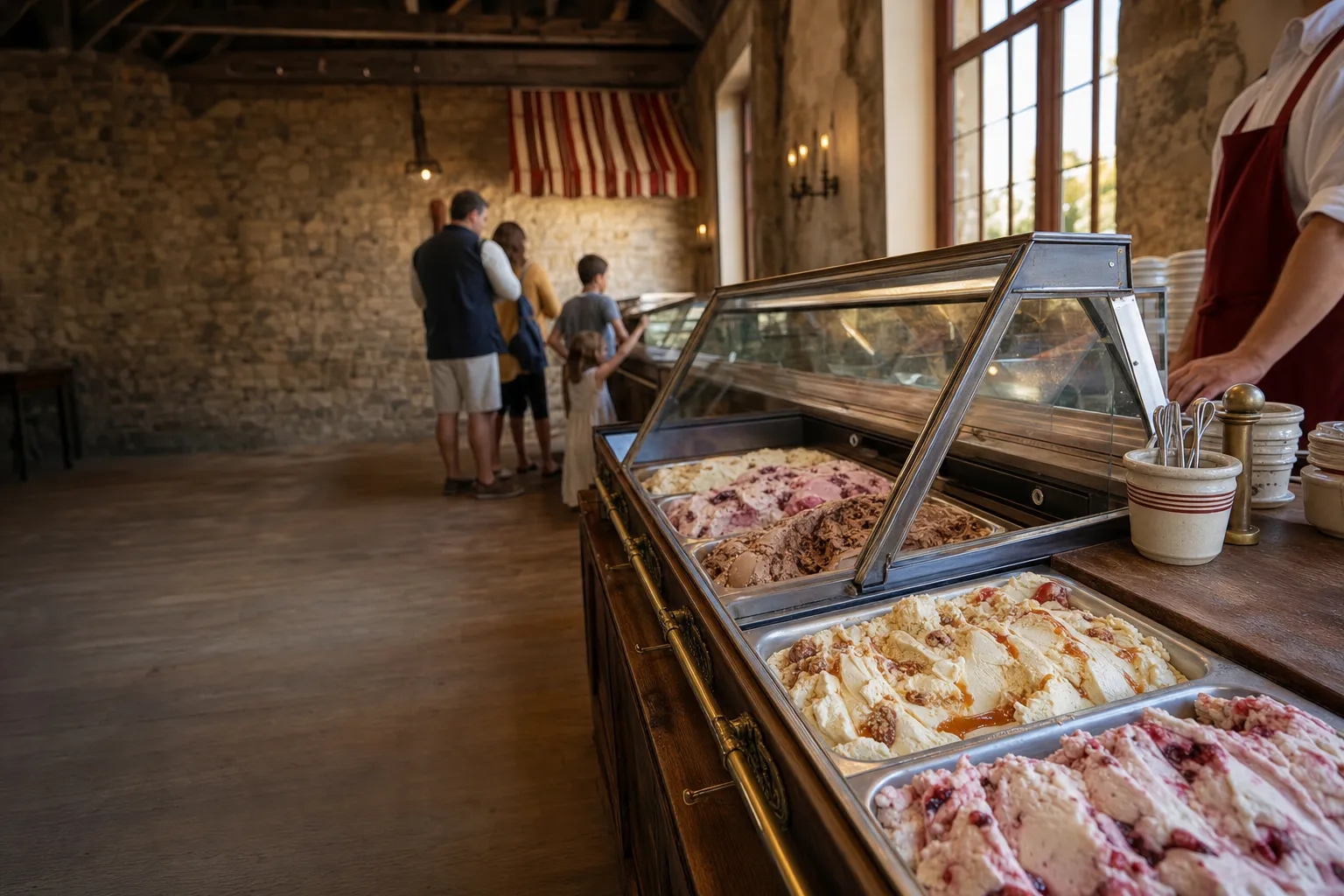
Texture and mouthfeel in ice cream are the result of ingredients and production choices working together: fat and milk solids, sugar and stabilizers, how much air is folded in, the size of ice crystals, plus any swirls or chunks. We control those variables at Brooker's Founding Flavors Ice Cream so each scoop has the feel we intend, whether chunky and chewy or silky and scoopable.
What we mean by texture and mouthfeel
When customers talk about texture they usually mean the physical qualities you notice as you scoop and chew. Mouthfeel covers the sensations in the mouth as the ice cream melts, such as creaminess, grittiness, iciness or chew from mix ins. These are sensory terms but they map directly to measurable things in the recipe and in the freezer.
We think about texture and mouthfeel in three practical ways: first contact when the spoon hits the surface, how it breaks into your mouth, and how it melts on the tongue. Each stage is influenced by different factors we control in the shop.
Key ingredients that shape texture
Fat and dairy
Fat creates richness and lubricity, which most people call creaminess. We start with fresh dairy from local family dairies that avoid artificial growth hormones and antibiotics, and we balance cream and milk to hit the mouthfeel we want for each flavor.
Sugars and sweeteners
Sugar lowers the freezing point of the mix, so it controls how firm or soft a scoop is at serving temperature. Different sugars and sugar levels change both sweetness and melt behavior.
Stabilizers and emulsifiers
Ingredients such as stabilizers and emulsifiers help control ice crystal growth and improve melt resistance. Used carefully, they create a smooth, consistent mouthfeel without tasting processed. For an accessible primer on the science behind stabilizers and texture, the Penn State extension has a clear overview of ice cream fundamentals.
Mix ins, swirls and inclusions
Chunky and swirly flavors add structure and contrast. Bits of cookie, ribbons of caramel, or toasted nuts change how a bite feels and how the ice cream melts. We design each flavor so inclusions enhance rather than overpower the base texture.
Production choices that change how ice cream feels
Beyond ingredients, the way ice cream is made determines ice crystal size, air content, and overall mouthfeel.
- Overrun. That is the amount of air added during churning. More air yields a lighter, fluffier product. Less air gives a denser, more indulgent feel.
- Freezing rate. Faster freezing produces smaller ice crystals and a cleaner, smoother mouthfeel.
- Mix aging. Letting the blend rest before freezing helps proteins and stabilizers hydrate, which improves texture.
- Batch size and churn speed. Small batch craft production lets us tailor churn speed so inclusions remain chunky and the base stays creamy.
We tune these variables for each flavor. For example, a super premium chocolate with a velvet finish needs a different churn and slightly higher fat than a chunky cookie mash that benefits from larger pieces and a firmer base.
Pro tip: If a flavor seems slightly icy at first, a short rest at room temperature makes the texture come forward. We serve most scoops at a temperature that balances scoopability and melt quality so family members of different ages enjoy it.
How climate and local conditions affect mouthfeel in Lehi Central
Local weather and how customers transport treats home matter. In warmer months around Lehi Central, ice cream can soften faster, so we account for that with slightly firmer batches and packaging choices that protect texture during short drives. In colder weather, a too cold freezer can make the first bite feel hard and mute flavor, so small adjustments in serving preparation help the mouthfeel come through.
Those local adjustments are part of why you will notice consistent texture when you visit us from across the valley and then enjoy the treat on the way back to Saratoga Springs.
How we design texture at Brooker's Founding Flavors
We combine ingredient sourcing, recipe design and hands on finishing to shape mouthfeel. Because we make small batch, super premium ice cream, we can choose higher quality dairy, adjust fat ratios, and cut or fold mix ins by hand. That approach is central to our small batch craftsmanship and to the playful, historical tavern style experience we offer.
When a customer asks why one flavor feels denser than another we explain the tradeoffs: denser equals more flavor per bite and longer melt, while lighter equals easier sharing and a different kind of sweetness. If you are curious about how a particular flavor was built, we often describe the choices and why we made them when we serve the scoop.
Learn more about our approach to small batch craftsmanship at the small batch craftsmanship topic page and see how specific flavors use those techniques on the Texture and Mouthfeel topic page.
How texture changes the experience for families and events
Families with kids and groups planning birthday parties notice texture in two ways. First, kids respond to contrast and fun inclusions, like big cookie pieces or chewy swirls. Second, adults notice melt and drip behavior during outdoor events. For sundae bars and party buffets we recommend choices that balance texture and practicality so toppings do not collapse the scoop. You can read more on our sundae options on the sundae service page.
How to notice and describe texture when you visit
- Look at the surface when we scoop. A glossy surface often means small crystals and a creamy base.
- Take a small bite and notice initial feel. Smooth and lubricating is high in fat and small crystals.
- Pay attention to melt time. A slower melt can stretch flavor across bites and make sharing easier.
Watch out: Freezer burn, repeated thawing and poor storage will ruin texture. If you take a pint home, short term storage in a stable freezer keeps the mouthfeel closest to what we served.
Key takeaway
Texture and mouthfeel come from ingredient choices, how we make the ice cream, and how it is stored and served. At Brooker's Founding Flavors we tune those elements in small batch production so each flavor offers the mouthfeel we intend, from silky and scoopable to chunky and chewy.
Related topics and services
For practical details on pairings and toppings that affect texture see our mix ins and toppings topic page. To explore how flavor development interacts with mouthfeel, read our flavor development topic. If you want to plan a dessert focused gathering and control texture across a menu, our services pages for ice cream and sundae gatherings outline options that work well for families and school groups. Learn more about Brooker's location and experience in Saratoga Springs on our location page.
Frequently asked questions
What makes ice cream feel gritty or grainy?
Grittiness usually comes from large ice crystals or undissolved sugar. Fast freezing and proper mixing reduce crystal size, while balanced sugars and stabilizers help prevent crystals from forming during storage.
Why do some flavors melt faster than others?
Melt rate is influenced by sugar content, fat level and air content. Higher sugar or lower fat tends to soften faster. Inclusions can also change local melt behavior within a spoonful.
Are stabilizers safe and do they change flavor?
Used in small amounts, stabilizers improve texture without noticeable flavor. They help keep ice crystals small and the mouthfeel consistent over time. If you want details on the science, the Penn State extension has a useful educational resource.
How should I choose textures for a party or buffet?
Mix dense, scoopable flavors with lighter, airier ones so guests can sample. Include at least one stable flavor that holds up under toppings and brief outdoor serving for events in the Lehi Central area.
Learn more and find us
Check our Google Business Profile to read recent guest reviews and get directions. For deeper reading on texture and related topics, visit our Texture and Mouthfeel topic page, our ice cream service page, and the topics index for other guides.
Texture and Mouthfeel topic | Ice Cream service | Saratoga Springs location | Small batch craftsmanship | Sundaes service | Topic pages